Caldera Flats Subdivision – Doug Button, DK Land LLC
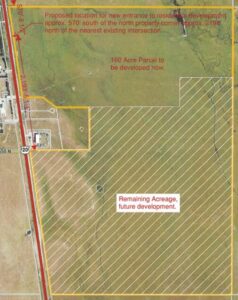
Doug Button and DK Land LLC applied for a Class II Permit in the Rural Base Zone of the Henry’s Lake Flats for a 32-lot subdivision on a 160-acre parcel. Mr. Button owns an additional 271 acres south of this property that he plans to develop at a later date.
Here’s the history of the public hearings that have been held to discuss this permit application:
- March 29th 2025: The discussion was tabled so that the Commissioners could gather more information.
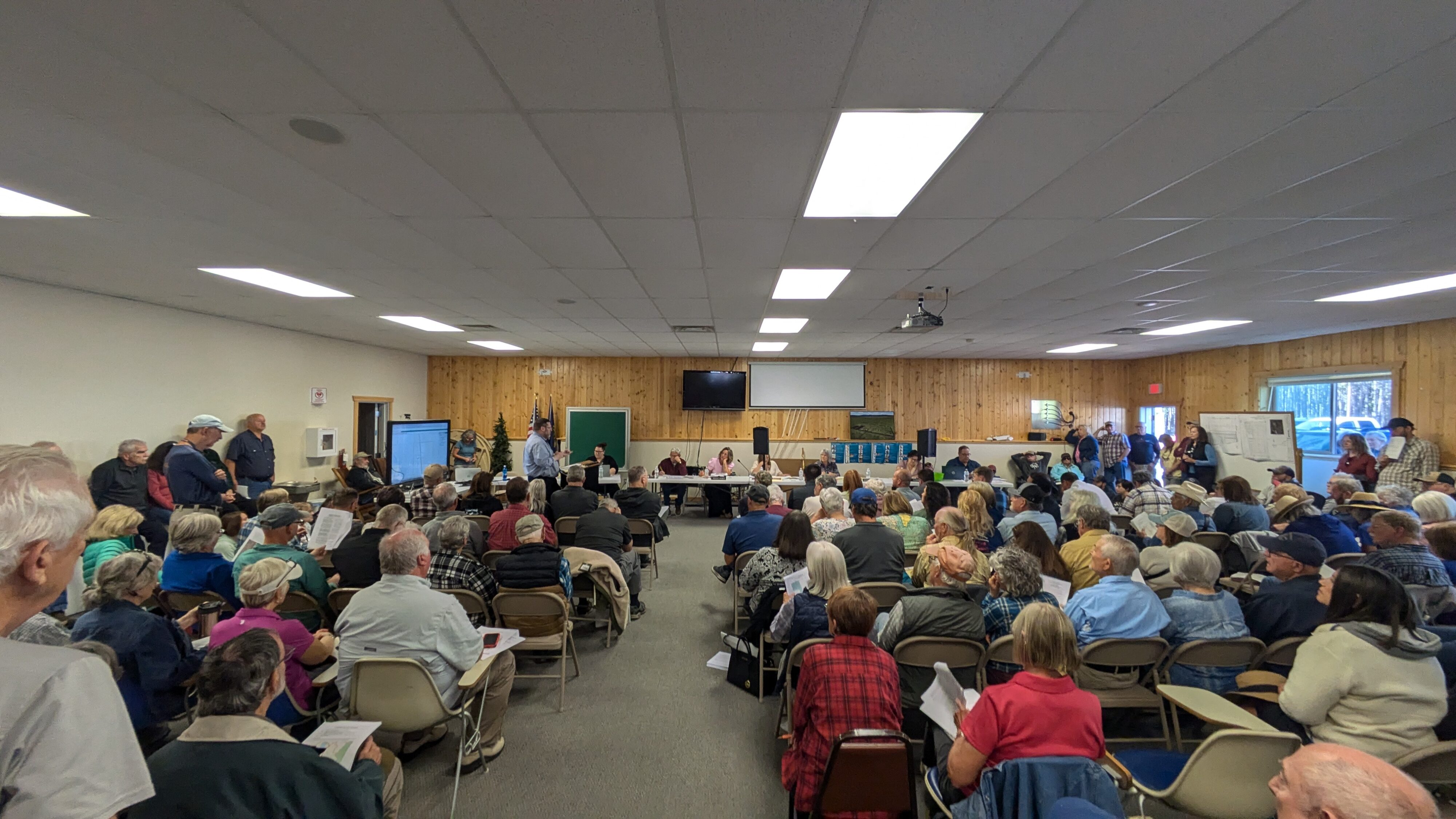
- July 14th 2025: This public hearing was held at the EMS building in Island Park. Testimony was heard by the Planning and Zoning Commission. Mr. Button and members of the community were allowed to provide comments. Again, the discussion was tabled until a later date.
- July 21st 2025: The Commissioners discussed concerns raised by agencies, non-profits, and the public regarding potential impacts of this project. Concerns included loss of wetlands, maintaining the health of the Henry’s Fork (the lifeblood of the area); agricultural protection, and wildlife. The Commissioners again tabled the decision and scheduled a fact-finding meeting for Monday, July 28th.
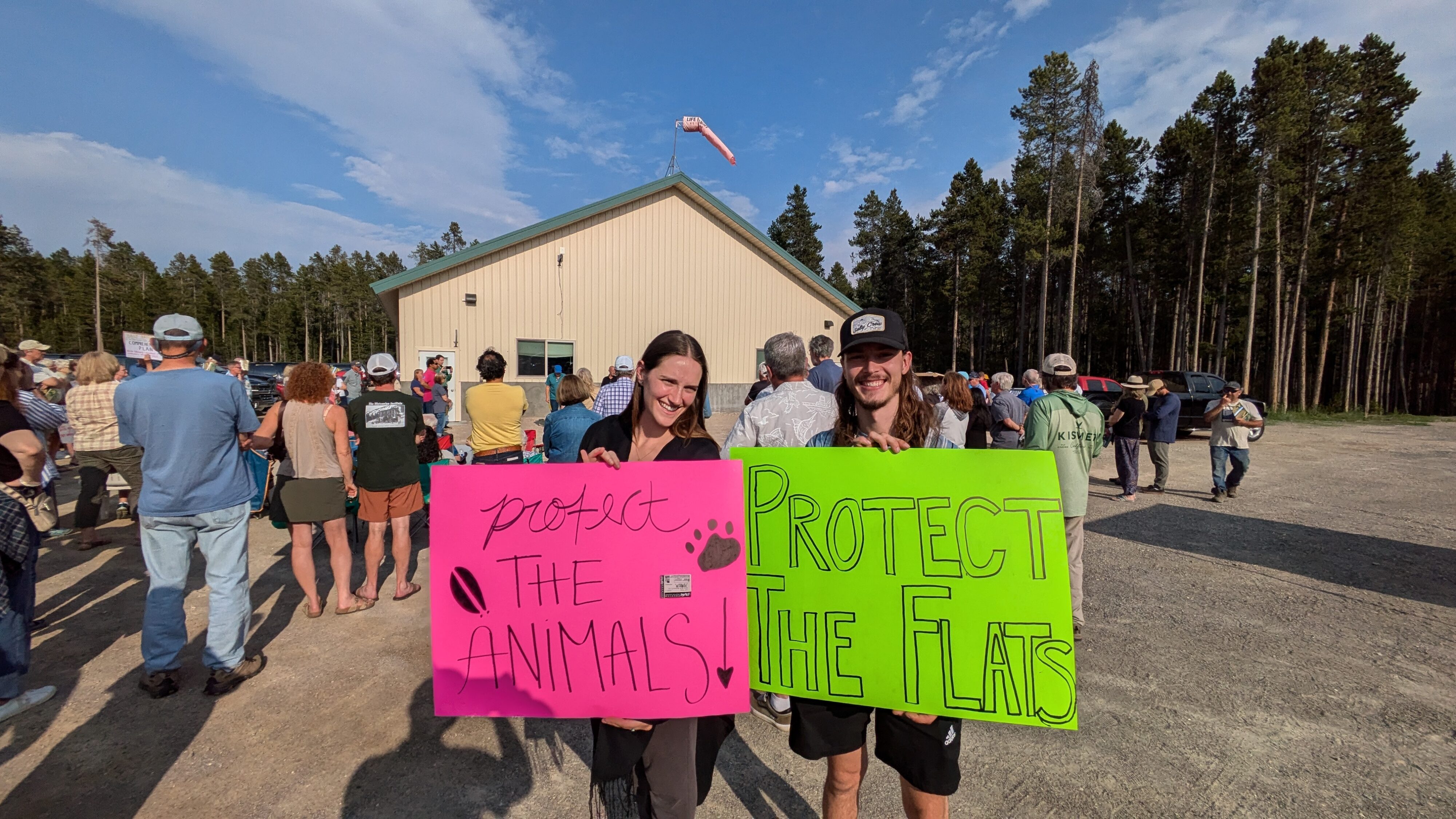
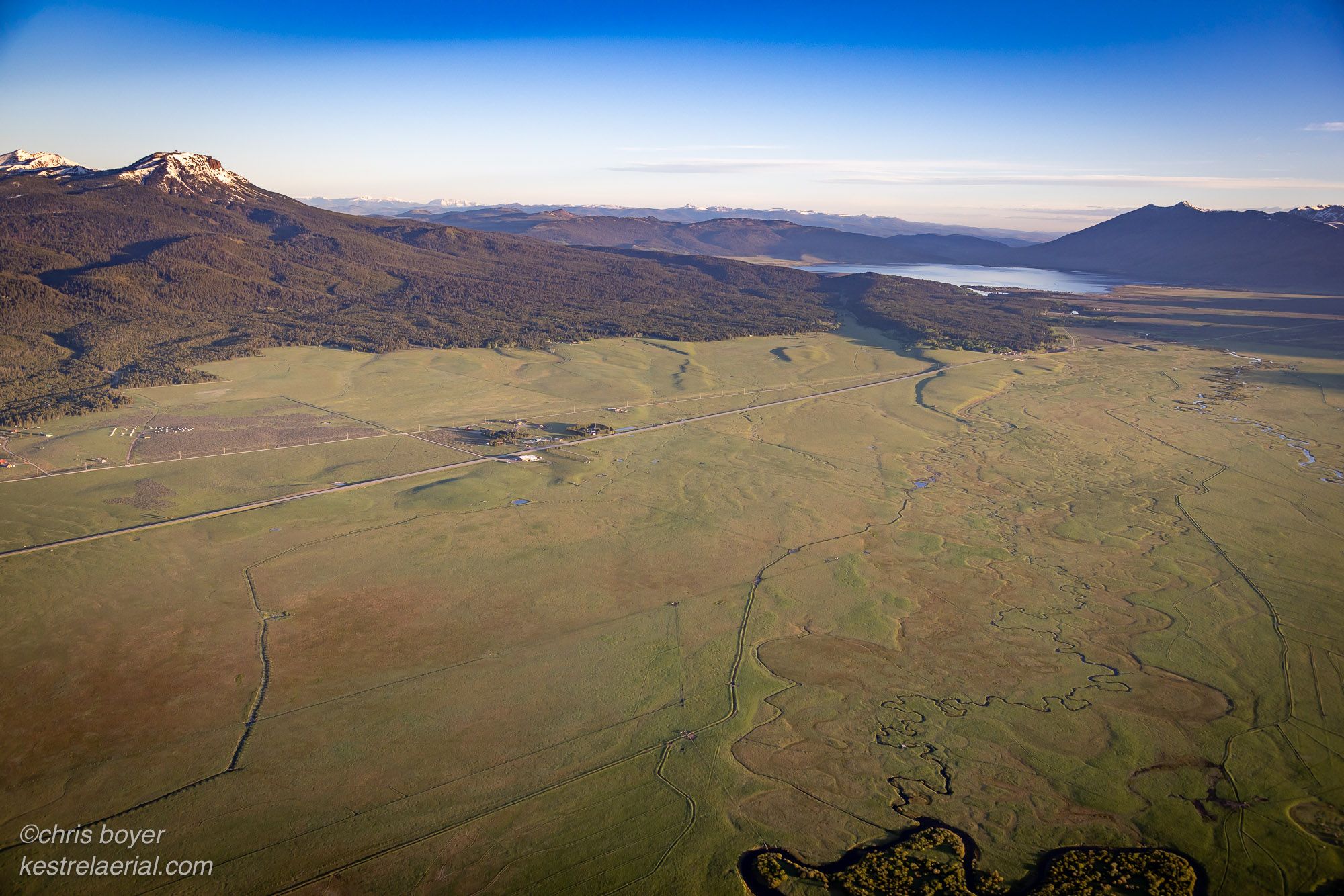
- July 28th 2025: During this meeting the Commissioners investigated competing claims from the developer and from many publicly submitted comments from individuals, landowners, agencies, and non-profit organizations. After careful consideration, the Planning and Zoning Commission denied the application by a vote of 7-2. They will now write up their Findings of Fact stating the specific standards that resulted in the denial of the application. Doug Button, the developer will have a chance to appeal the denial to the Fremont County Board of County Commissioners so be on the lookout for further messages and calls to action if this happens. The Henry’s Lake Flats provide ecosystem services that can never be fully replicated by humans. These services include water filtration, aquifer recharge, flood control, and support of wildlife ranging in size from grizzly bears to insect pollinators. So, our deepest thanks go out to everyone who submitted written comments, spoke up at public meetings with oral testimony, and sat through hours of meetings to Protect the Flats!
Points of concern include:
- The Fremont County Development Code (FCDC) section 5.51 qualifies any subdivision of greater than 35 lots as a large-scale development. The applicant has restricted this first phase of development to 32 lots, reserving future development on the remaining 270 acres. This scheme will allow the applicant to subdivide the remaining acreage into another 54 lots (based on the allowable residential density of 20 residences per 100 acres stated in the FCDC) for a total count of 86 lots. Presuming that the applicant subdivides the next phase of development into 32 lots he will again avoid the large-scale development trigger even though at that point he will have subdivided the property into 64 lots (well above the 35 lot limit). If the applicant continues on with a third phase of development he could develop up to 86 lots without ever being required to comply with large-scale development requirements including that the developer make a “…fair, proportional contribution to the provision of any new public facilities or improvements to existing public facilities…” (FCDC section 5.52) as determined through the many studies that would be required (e.g. sewer analysis, school impact analysis, natural resource analysis, traffic impact analysis, impacts on transfer station capacity, etc.).
- A Nutrient Pathogen study was prepared for the proposed development because the project lies within 200 feet of a wetland area and groundwater at the site is within ten feet of the ground’s surface. That study states that the proposed development will be serviced by the Fremont County Sewer District. Although sewer service will reduce nitrogen issues associated with septic tanks, it does not address inputs of both nitrogen and phosphorus due to landscape maintenance activities. Fertilizers and other chemicals applied during landscape maintenance will surely increase nutrient loads of both phosphorus and nitrogen in wetlands and waterways leading to deleterious effects including toxic algal blooms. The Henry’s Fork Foundation has shown increasing phosphorous loading in the Henry’s Fork which can be exacerbated by additional sources of input. The economy of Island Park depends on recreational dollars and recreational dollars are tied to a healthy and thriving river ecosystem.
- Fremont County Code Chapter 5, Section 59 states the performance standards for open space. It requires open space be held and managed for open space purposes by a condominium association, homeowner’s association, private conservation organization or governmental body, through the dedication of an easement to Fremont County, or held privately as a conservancy lot with a deed restriction enforceable by the County. These performance standards do not indicate open space on private individual home lots counts towards the requirement of open space. But this project does exactly that. The requirement that the applicant provide an Open Space Ownership and Management Plan reinforces the interpretation that open space cannot be on individual lots. However, the Preliminary Plat includes a note that “the areas designated as open space will be retained by the owners of the individual lots as their private property, but will be treated as a separate lot as outlined in the open space subdivision ordinance 401.C. Open space areas are restricted to all structures.”
- FCDC section 8.02 discusses required improvements for compliance with any absolute performance standard of the FCDC including 8.02.020 “Any open space or recreational area or facilities required of a large scale application.” The open space requirement includes continued maintenance, per FCDC section 8.14. The continued maintenance requires a mechanism to ensure compliance, which is addressed in FCDC section 8.16: “Any application subject to the continuing maintenance requirement of 8.14 that results, or may reasonably be expected to result, in the creation of multiple ownerships (subdivisions, condominiums) shall create a community association or similar mechanism to assure continuing maintenance. The Applicant shall submit the proposed declaration of covenants, articles of incorporation, and by-laws for the community association with the application for a permit and these documents shall be approved by the County’s legal counsel and recorded before any certificate of compliance is issued”. Other than a declaration on the submitted “Preliminary Openspace Ownership Map” stating that “…open space maintenance will be regulated by the HOA and the covenants and restrictions” I don’t see any covenants, articles of incorporation, or by-laws for a community association. As stated in the text of the FCDC, these must be submitted with the permit application.
- This application has the same problems the Burtenshaw application did in terms of a lack of information: though it provides some detail, it does not provide the level of detail required under Code. For instance, the application does not include review and comment from most applicable agencies, as required by F.C.C. §§ 3.05.040 and 3.13.020(c). Only ITD submitted input saying it approved the traffic study. The narrative says the applicant spoke with the Army Corps of Engineers but there is no
report or correspondence to that effect. - The application does not provide the required information and studies to ensure compliance with applicable performance standards under F.C.C. Chapter 5. The staff report says “the Commission shall determine whether the proposed application is in compliance with the Plan and all requirements of this ordinance. If the proposed application complies with all applicable performance standards of this Ordinance the application for a permit shall be approved.” Without the required information and studies, the Commission cannot and should not approve the application.
- The proposed development (1) is located within “significant wetland areas and channels” and potential wildlife habitat, and (2) will require individual lots to provide their own stormwater mitigation and to obtain potable water via individual wells. Neither of these concerns has been addressed through agency feedback or evidence of performance.
- The staff report indicates a sketch plan was presented to P&Z on January 16, 2025. The sketch plan stage should have presented agency feedback. Though the staff report says minutes are attached, no minutes are attached and none were available for that meeting online. Regardless, no meeting minutes are available online for any 2025 meetings.
- The application should provide plans and an explanation of how site design complies with the requirements of FCDC 9.2, the “four step site planning procedures for open space subdivisions.” The plans provided in the application materials do not provide the level of detail required by this section of Code. To our knowledge there is no such open space subdivision ordinance 401.C to review. But neither does it comply with what is in the Fremont County Code we reviewed. The staff report does not comment on open space except to say that the applicant has “platted” the required number of acres.