
By: Terry Thomas
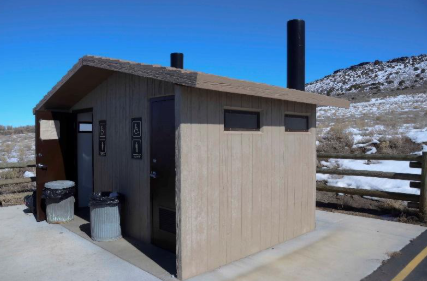
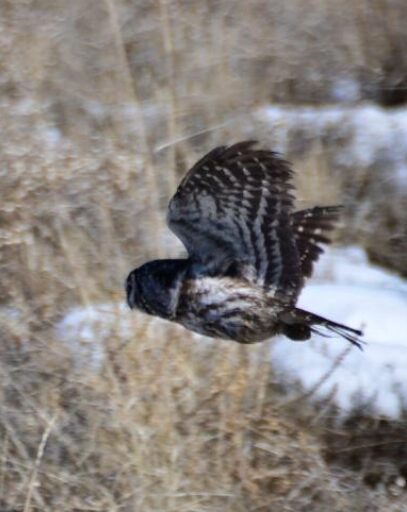
What I discovered at the bottom of the outhouse at the North Menan Butte trailhead stopped me in my tracks. It was an owl, a boreal owl, uncommon in our area. I couldn’t abandon it in its plight, but I was completely perplexed on how to extract him without becoming mired myself in something foul beyond imagination.
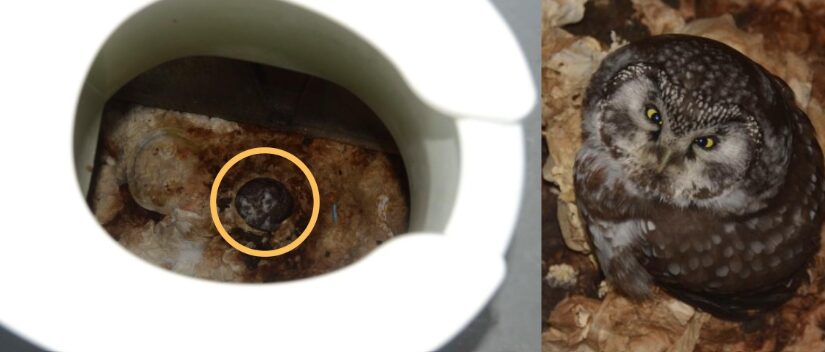
My first thought was to try inserting something like a pole that the owl could climb up. I found a long metal fence post, the kind with protrusions to keep wire from sliding up and down. I thought the bumps would yield a perfect foothold. But when I slipped the post down the toilet, I could see that the angle would be almost vertical. Although I waited over half an hour, I despaired that the bird would climb up such a steep incline.
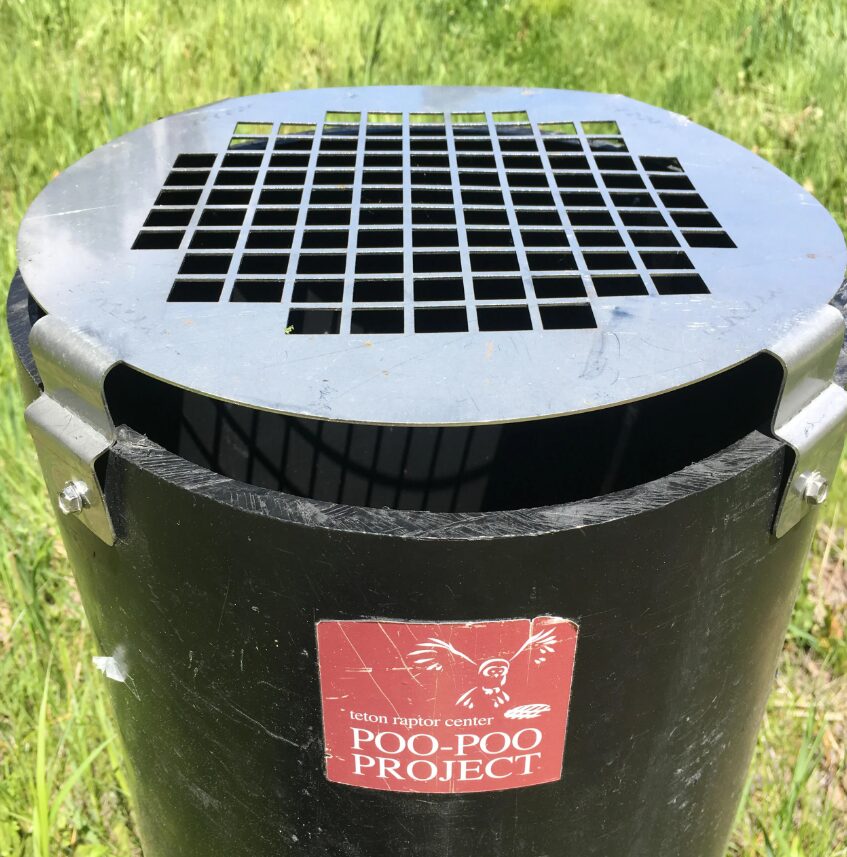
How the owl became entrapped in the vault of the outhouse was not much of a mystery. A large diameter black vent pipe on the back was clearly at fault. Vertical pipes are an irresistible temptation to birds of all kinds, but especially cavity nesters like the boreal owl. They are silent killers though, because once inside, the birds are unable to open their wings and the pipe is too slick to climb.
One of the first places to document open pipes acting as wildlife traps was the Kern River Preserve in California. Staff went to retrieve an irrigation standpipe, about 20 feet long and eight inches in diameter, that had finally rusted through and fallen over. When they picked it up, they were stunned to find a seven foot long mass composed entirely of wildlife skeletons. For 50 years, this pipe had been a death sentence for thousands of birds and other animals.
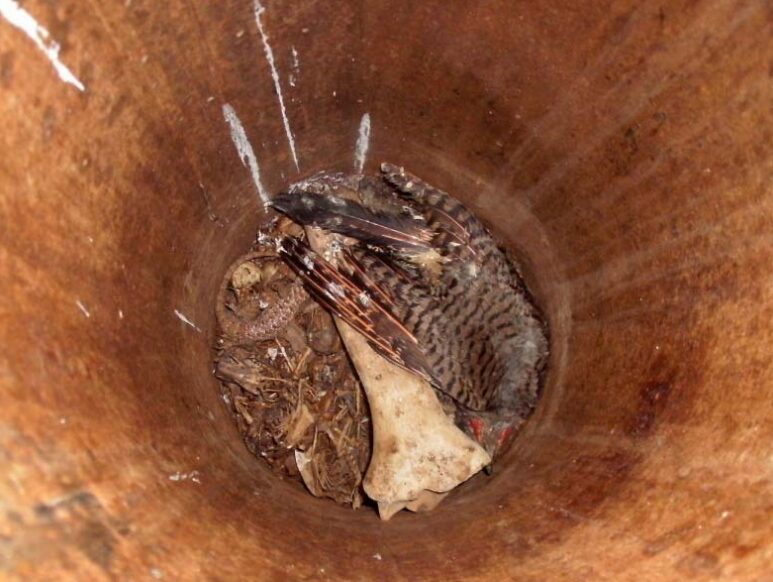
In Nevada, researchers examined 854 standing pipes marking mining claims. They found 879 birds, 113 reptiles, and 20 mammals had perished for an average of 1.2 animals per pipe. With over 3.4 million mining claims in 11 western states (often with many pipe markers per claim), the number of needless wildlife deaths just from this one source can be staggering.
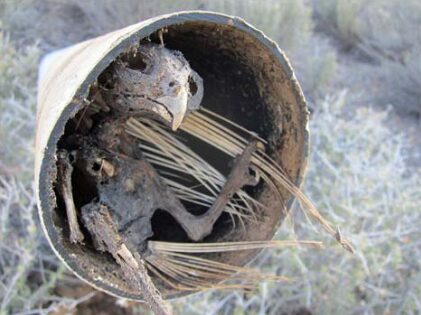
And it was clear that unscreened outhouse vents pose the same deadly threat. An hour into the ordeal, I still didn’t have a good solution, so I visited the nearby office of the Deer Parks Wildlife Mitigation Unit and borrowed some netting, wire, and duct tape. With the help of biologist Paul Faulkner and Rob and Caleb, a couple of willing bystanders, I fashioned a hoop net and slipped it into the vault. But the owl was too wary to be caught.
Then Rob discovered that this outhouse was equipped with a large trap door for cleaning. The lock didn’t prove to be much of a challenge and we quickly had the big door open. I carefully scooped around, guiding the bird toward the hole. It suddenly seized its opportunity and flew out of the pit and plopped into the snow a few feet away. In another moment it was gone.
It felt great to rescue that owl, but it was a good reminder that a little prevention (screening the vents) would have spared it an unpleasant and potentially tragic experience.
Terry Thomas is a wildlife biologist with 30 years of experience. He worked as a regional habitat manager for the Idaho Department of Fish and Game and wrote this article after an experience at the North Menan Butte trailhead in 2013.